
Hospital Duct Bank Ceiling Grid Solution
March 3, 2026
Unistrut Midwest quickly solved a client's unexpected challenge with a Unistrut ceiling grid solution.
- The ceiling grid solved a dangerous, high-liability issue
- Our team's expertise resulted in a quick turnaround to help keep the project on schedule
Overview
While contracted to provide medical equipment supports in a university hospital system’s new construction project, the Unistrut Midwest team was approached by the client with a new scope of work.
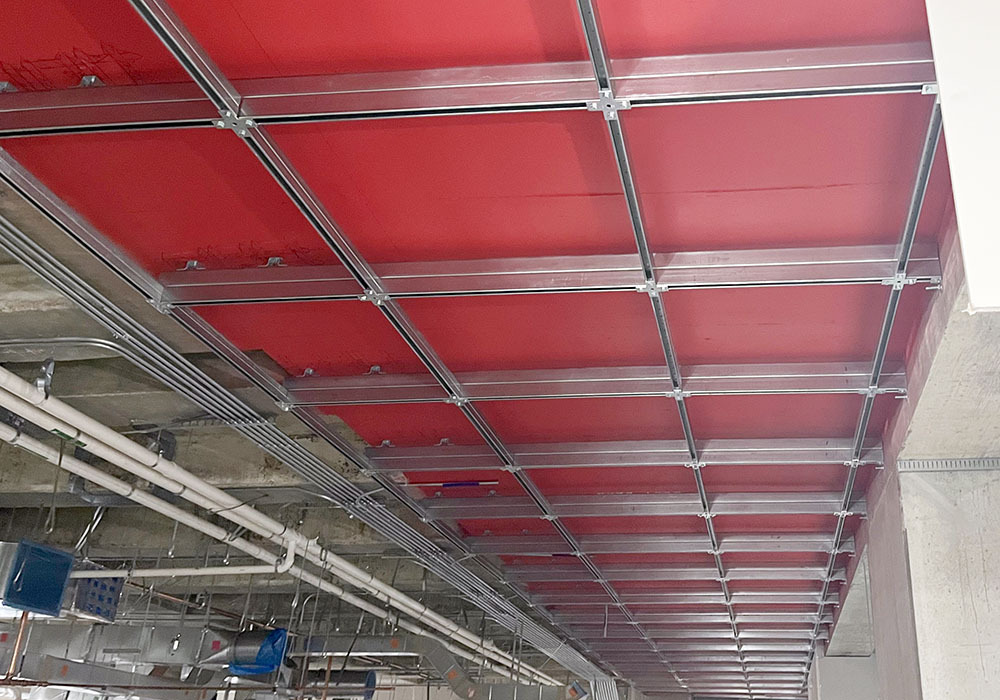
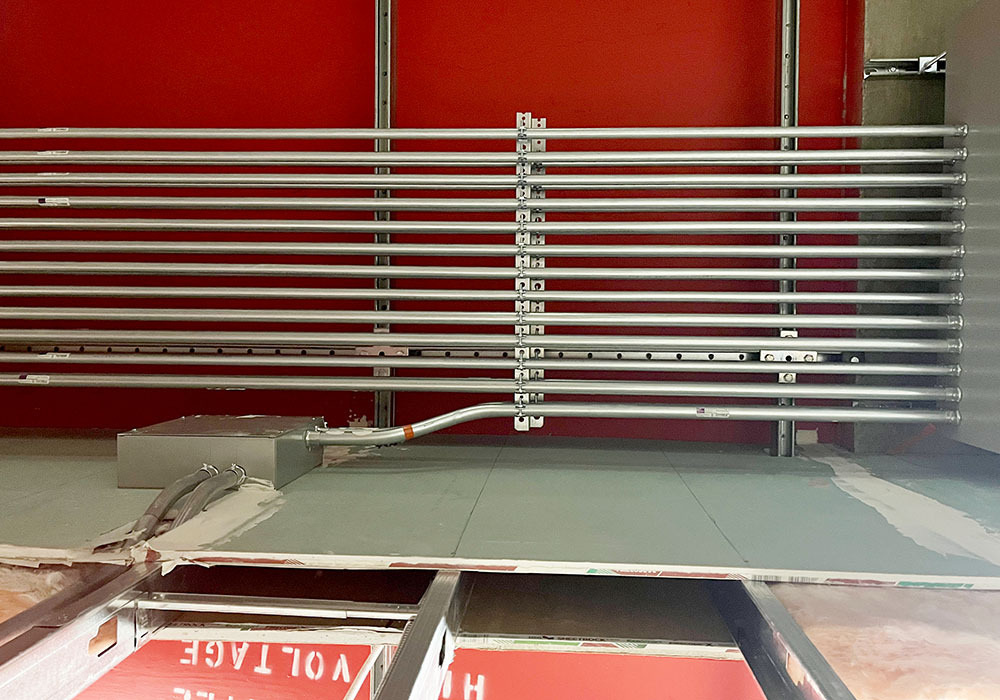
The hospital's electricity was buried in the concrete floors of each level of the building, with all wiring meeting at a single point in the basement ceiling. Here, large metal pans containing the high-voltage electrical wiring for the entire hospital, called duct banks, occupied hundreds of square feet of the ceiling and were hidden inside the concrete. This created a huge liability for the client, who had additional contractors who needed to install utilities in that area, but couldn't drill into the ceiling due to the possibility of hitting the electrical wiring. Luckily, Regional Construction Sales Manager Dave Ellis and the Unistrut Midwest team had a straightforward solution.
Approach
While the client was unsure as to how to move forward, our team knew that a ceiling grid would easily solve this client's problem. After initial discussions and a site visit to determine details, Unistrut Midwest designed, engineered, supplied, and installed the ceiling grid solution.
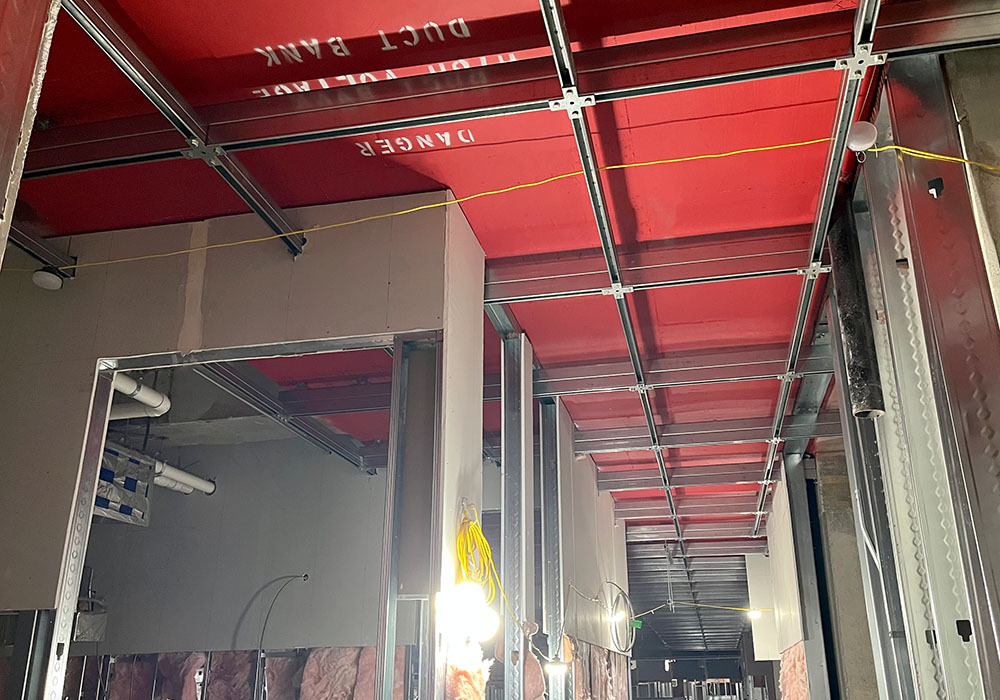
The goal of this project was to provide other trades teams with adequate support sites for their utilities without having them drill into the high-voltage concrete ceiling. While something like a sprinkler pipe or drop ceiling needs to be supported every few feet, the ductbank created 20+ foot spans where nothing could attach to the ceiling. Adding the ceiling grid would provide plenty of opportunities for support locations.
Solution
Our team’s priority for this solution was not only designing a ceiling grid that met the limitations of the space, but also coordinating the installation to result in as few disruptions as possible. Out of an abundance of caution, the electricity in the duct bank area was shut off during the ceiling grid anchor installation, cutting the power to different areas of the building. This affected active patient care areas of the hospital, so our team worked quickly to ensure that the power was not out any longer than absolutely necessary.
The client had a concrete scanning company identify where voids in the conduits were located so that our team could design a grid using those points for anchoring Unistrut into the concrete. The voids were not uniformly spaced, but our team's extensive experience designing Unistrut ceiling grids allowed us to design a grid solution that worked with the irregular spacing. From there, anchors were installed in the identified voids, and the ceiling grid was installed.
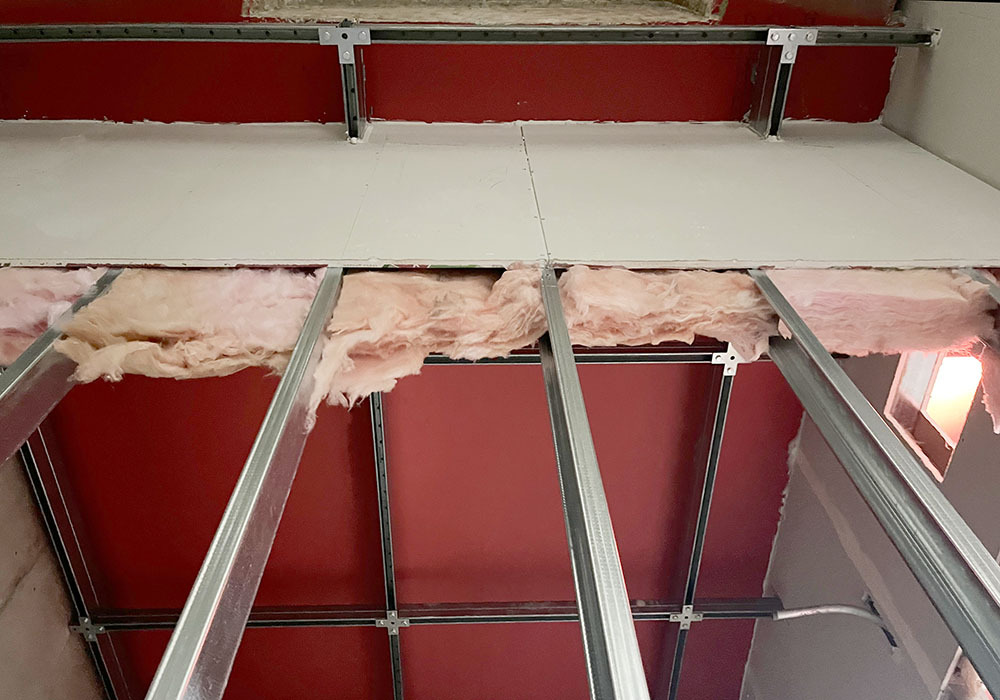
Our team leveraged decades of expertise to provide a quick and straightforward solution for the installation site limitations, resulting in minimal time lost for other contractors on the job site and a satisfied client.
Do you have a project that could benefit from a custom Unistrut Midwest solution? Contact our team to get started.